August 22, 2023

BDO’s Employee Stock Ownership Plan: A Bold Move

When BDO USA’s 880 partners met recently in Florida, they voted nearly unanimously to establish an employee stock ownership plan (ESOP). The plan is scheduled to go into effect on August 31, 2023 and will give the firm’s 10,000 employees a direct stake in ownership. The firm’s executives will continue to lead the company and build its tax, audit and advisory services.
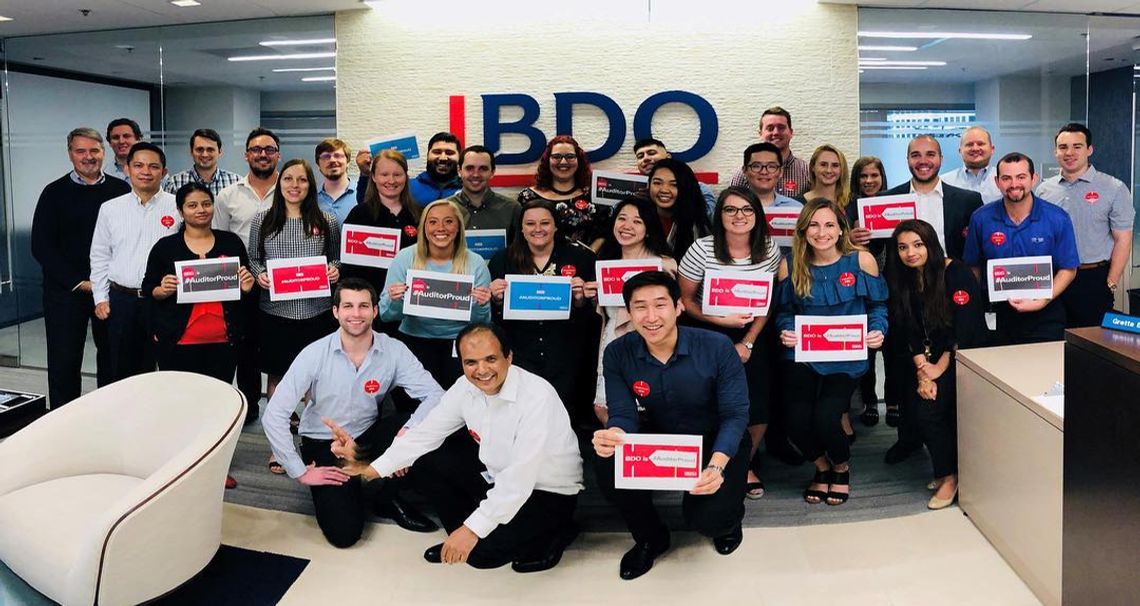
BDO Employee Stock Ownership Plan

Attracting and retaining talent is a major focus for Berson and BDO and their new ESOP is a key part of that strategy. “The people who contribute to our success will have the opportunity to benefit from it,” Berson added.

According to BDO USA CEO Wayne Berson, “”We do a lot of choice-of-entity consulting, and we thought, ‘Why don’t we just look at it [an ESOP] for BDO?’ And we concluded we’d be better off as a corporation.”

Attracting New Talent

One of the primary drivers for BDO’s move to employee ownership is to attract new talent. “We’re dealing with a much more severe situation today than five years ago in this industry, which has not attracted enough people into the firms,” Berson stated. “The younger generation wants a piece of what they are helping build.”

Transitioning to an ESOP is designed to address a growing set of interlinked issues for accounting firms – funding partner’s retirement, attracting new employees, and generating cash flow for technology investments, according to W. Robert Knechel, an accounting professor and director of the international accounting and auditing center at the University of Florida.

“These firms are all wrestling with how you essentially take a 100-year-old business model and update it in a much more fluid, dynamic, financially oriented market,” Knechel said.

BDO USA’s CEO reinforced this theme, “We knew we weren’t getting enough people, and our people team started studying the generational differences,” Berson said. “The more we studied it, the more it pointed to something like this.”

“To be a best-in-class advisory firm, we need to be able to invest and to bring on the best people,” continued Berson, who has focused on creating an attractive culture – one that foregrounds flexibility and diversity — since the beginning of his tenure as CEO over a decade ago. “People want to work where they have meaning and purpose — and the ESOP creates a shared sense of purpose and responsibility.”

Funding the ESOP

According to the Wall Street Journal, BDO “secured about $1.3 billion in private debt from funds managed by affiliates of alternative-asset manager Apollo Global Management, among others”to fund the creation of the ESOP and restructure existing debt obligations”. Berson stated that no companies, including Apollo, received equity as part of the deal.

“This is not a private equity deal — it is private credit,” Berson explained to Accounting Today. “It’s realigning our debt and our obligations to optimize our business and invest in the firm. Much of the Apollo funds will fund the creation of the ESOP.”

“People are saying this is an infusion of cash to pay off debt,” he continued, “but nothing could be further from the truth. It enables us to realign debt and keep control of the firm in our hands, while giving us the financial flexibility to continue to invest in our business.”

The deal refinances BDO USA’s existing credit line which allows it to reap tax benefits from the ESOP. Additionally, employees’ annual allocation of shares in the ESOP trust is tax deductible for the company. According to Berson, “That enables us to repay debt and enables us to invest in quality.”

The move to an ESOP follows the July 2023 shift in legal structure for BDO USA, which is based in Chicago, from a partnership, a structure used by many large accounting firms, to a professional services corporation.

A Model for the Future

Berson told Accounting Today that he expects more firms to transition to an ESOP in the future and sees employee ownership as a strong alternative to an investment from private equity.

“We get all the benefits of private equity, without giving up control of the firm,” he said. “I bet you’re going to see more of this kind of deal before the end of the year, or at least dialogue around it. It doesn’t make sense why someone wouldn’t do it.”

“Our industry is at an inflection point — you’ve seen how private equity has influenced the profession in recent years,” he continued. “We explored private equity, but knew it wouldn’t be the right model for us. It may work for other firms, but not for BDO. But we recognized we needed to transform our business to meet our investment and growth goals, and the needs of our people.”

Attracting and retaining talent is a major focus for Berson and BDO and their new ESOP is a key part of that strategy. “The people who contribute to our success will have the opportunity to benefit from it,” Berson added.

Share this article:
LinkedIn
Twitter
Facebook
WhatsApp

Learn why an ESOP is better for You,
your Business, and your Employees

Upcoming Web Seminar

Free 90-Minute Webinar for Business Owners, CFOs & Advisors

Learn how ESOPs fuel growth, reduce taxes, and power succession—without giving up control.

Days
Hours
Minutes
Seconds

Why 2026 is the Time for ESOPs

Strong companies are using ESOPs to play offense. With rates stabilizing and talent still tight, employee ownership is delivering a durable edge:

    • Founder Liquidity—On Your Terms. Create a market for your shares without selling to private equity or competitors.
    • Major Tax Efficiency. Enable capital‑gains deferral for selling shareholders (Section 1042 eligibility) and reduce or even eliminate ongoing corporate income tax for S‑Corporation ESOPs—freeing cash for growth.
    • Talent Magnet. Meaningful employee ownership boosts engagement, retention, and performance—without relying solely on wage increases.
    • Resilient Margins. ESOP tax advantages help counter wage pressure, input costs, and tariffs—so more operating cash flows to strategy.
    • Control & Culture Intact. Transition ownership while keeping leadership and values in place.. Transition ownership while keeping leadership and values in place.

Bottom line: ESOPs create a rare win‑win‑win—for owners, the business, and employees.

What You’ll Learn

ESOP 101—Modern Playbook
How ESOPs work in 2026, who qualifies, deal structures, and timelines.

Tax Strategies that Change the Math
Capital‑gains deferral, corporate tax reduction/elimination for S‑Corp ESOPs, deductible contributions, and cash‑flow modeling.

Talent & Culture
Retention without across‑the‑board raises; ownership communications that actually move the needle.

Protecting Margins
How ESOP incentives can offset cost inflation and support reinvestment.

Valuation & Financing in Today’s Market
Bank/seller notes, mezzanine options, rate considerations, and why “bankable ESOPs” are closing now.

Governance & Control
Board, trustee, and management roles—what really changes (and what doesn’t).

Who Should Attend

    • Business Owners planning an exit, partial sale, or recapitalization

    • CFOs evaluating capital structure and tax strategy

    • Advisors & Succession Planners guiding owner‑led companies

    • HR & ESOP Committee Members building engagement around ownership

Agenda (90 Minutes)

    1. Welcome, Speakers & Why ESOPs in 2026 (5 min)
      Quick orientation; who Menke is and why ESOPs are winning right now.
    2. ESOP Basics & Business Owner Benefits (10 min)
      What an ESOP is; liquidity, diversification, succession, productivity.
    3. Myth‑Busting: What ESOPs Do—and Don’t—Require (5 min)
      No, you don’t have to sell 30%+, borrow big, or give up control.
    4. Deal Structures & Transaction Paths (10 min)
      Cash‑contribution (pay‑as‑you‑go), leveraged (bank/seller notes), and stock contribution; when each fits.
    5. Typical Scenarios & Outcomes (10 min)
      Gradual sales, minority/majority sales, 100% buyouts, and recap strategies.
    6. Who’s a Strong Fit (and Common Constraints) (5 min)
      Profitability, team/transition readiness, industry notes.
    7. Tax Strategy Deep Dive (10 min)
      S‑Corp ESOP distribution savings; C‑Corp §1042 capital‑gains deferral; entity‑path options.
    8. Valuation & Pricing vs. Third‑Party Sales (8 min)
      FMV standards, control vs. minority value, practical comparisons.
    9. Financing the ESOP (8 min)
      Bank market overview, seller paper, balance‑sheet effects, cash‑flow modeling.
    10. Plan Operations & Employee Communications (8 min)
      Eligibility, vesting, distributions, disclosures, and how transparency drives results.
    11. Culture, Engagement & Measured Performance Uplift (6 min)
      What changes on day 2; tying ownership to productivity.
    12. Roadmap & Next Steps (3 min)
      Feasibility, design/adopt, contributions, and timing the sale.
    13. Live Q&A (2 min)

Hear From Past Attendees

“I came in skeptical. I left with a concrete roadmap and the math to brief our board.”

“This clarified our exit plan and showed how we can reward employees at the same time."

Your Presenter: Phil DeDominicis

Phil DeDominicis is an ESOP strategist and M&A advisor who has guided 300+ companies through ESOP formations, financing, and transactions over 20+ years at Menke & Associates. He specializes in selling ESOP‑owned businesses to financial or strategic buyers and in helping ESOP companies acquire other businesses.
Before Menke, Phil spent 14 years in investment banking M&A at Morgan Stanley and Salomon Smith Barney, advising middle‑market companies on change‑of‑control transactions. He holds a B.S. in Chemical Engineering from the University of Delaware (1985) and an MBA in Finance & Accounting from UCLA Anderson (1989). Phil currently serves on six for‑profit and not‑for‑profit boards.

What Phil will cover:

    • Where ESOPs win in 2026 (tax, talent, and control)
    • Owner liquidity paths: minority, majority, and 100% sales
    • Financing options and what lenders look for
    • Valuation reality vs. third‑party sales
    • How to prep a board, trustee, and employees for a successful close

Reserve Your Spot Now

Seats are limited. Save yours now and receive the ESOP Feasibility Checklist.

10:00AM – 11:30AM PT
11:00AM – 12:30PM MT
12:00PM – 1:30PM CT
1:00PM – 2:30PM ET

No cost. Suitable for companies with $5M–$500M+ in revenue across construction, manufacturing, services, distribution, tech, and more.

FAQ (Quick Hits)

    • Do I lose control? No—most ESOPs preserve day‑to‑day control with your leadership team and board.

    • Is this only for certain industries? ESOPs work across sectors when cash flow is stable and leadership continuity matters.

    • Can we do a partial sale? Yes—stage liquidity over time while capturing tax benefits.

READY FOR AN ESOP NOW?

Interested in finding out how an ESOP could work for your company?

For a free preliminary analysis, just fill out our ESOP Feasibility Questionnaire.

Related Articles

Man viewing employee stock ownership plan presentation on computer screen.
July 29, 2026
Don’t miss this opportunity to discover how ESOPs can align your business goals with the needs of employees and stakeholders.
Brass straightedge on slate, representing consistent ESOP valuation standards under new federal law
September 17, 2026
For fifty years, the hardest question in employee ownership was not how to finance the deal or how to structure the tax benefits. It was what “adequate consideration” actually meant. Congress has now answered it — and the answer is narrower, and more useful, than the headlines suggest.
Unfinished steel-frame building with a focused beam of light, representing AEC marketing and ideal client focus
September 14, 2026
Most contractors say they win work on relationships, and most are right, up to a point. What happens when the people who hold those relationships retire, or when the firm tries to grow into a market where nobody knows its name?
Abstract suspended architectural span under cable tension, representing the long-term structure of a Section 1042 tax deferral
August 31, 2026
A seller who elects Section 1042 on a $100 million ESOP transaction can defer roughly $33 million in capital gains tax, potentially for life. The same election, structured without care, can leave that seller carrying leverage on a securities portfolio for decades. The difference is in how the portfolio is built.
Abstract network of interconnected nodes representing ESOP employee ownership culture
August 17, 2026
Two companies can have identical ESOP structures on paper and produce completely different results. The difference usually comes down to three specific things — and most companies get at least one of them wrong.
Abstract image of a converging path symbolizing a 2026 ESOP market midyear review
August 3, 2026
Halfway through 2026, the ESOP market looks different than it did in January — bank lending is more competitive, private equity firms are eyeing ESOPs as an exit, and legislation is moving. Here’s what’s actually changed.