March 27, 2024

Zepnick Solutions: It starts with an idea.

In 2000, Jody Zepnick, founder of Zepnick Solutions, had an idea. He wanted to create a business that would not only serve a growing niche — manufacturing automation — but would also be a place that people want to work for. Fast forward 24 years, Zepnick has provided engineering solutions and equipment for automation to manufacturing companies with ideas that they want to turn into results. In February of 2024, the employee-owners of Zepnick Solutions joined Salas O’Brien, a global powerhouse in engineering. Read on to learn more about Zepnick.
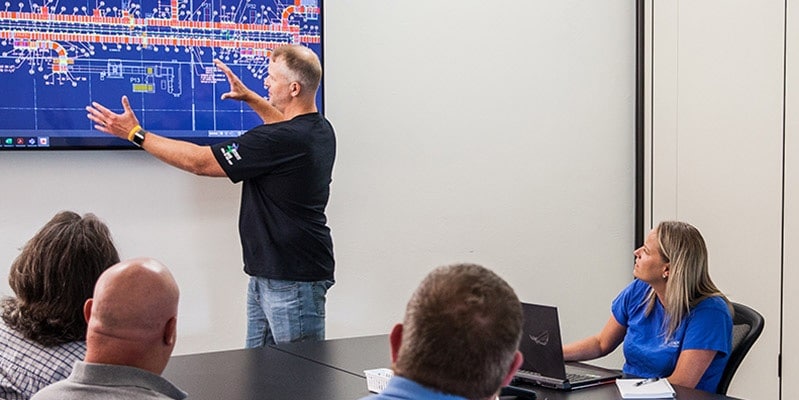
Zepnick Employee Owners in Action

“Zepnick Solutions is an employee-owned, family-centered, and driven-to-excellence company that believes work is personal. We seek to attract the best minds and no egos.”

A place that businesses want to work with and people want to work for.

The Zepnick team prides themselves on getting calls that start with, “We have an idea, but aren’t sure how to get it done,” or “We need to increase capacity.” When Zepnick gets those calls, they get to work, partnering with customers to find the right solution that will work for achieving their goal.

For more than 20 years, Zepnick has developed mechanical, electrical, process, and technology solutions for clients in the manufacturing sector who want to turn their ideas into reality. Zepnick is known for engineering solutions and automation design for the food, paper, and consumer goods industries.

According to Jody Zepnick, Founder and CEO of Zepnick Solutions, “Customers hire us because we deliver. They know we are not only giving them the products they want, but they know we’re also providing them with value. It’s only when everything works right that our job is done.”


Due to their expertise, focus on results and customer-first philosophy, Zepnick has grown to more than 50 employees since their inception more than 20 years ago. With headquarters in Green Bay, Wisconsin, the company expanded its operations by opening an office in the Cincinnati area of Ohio in 2020 to be closer to clients.

Customers appreciate the combination of skills, client service and ‘can-do’ spirit at Zepnick. Josh Chun of Leprino Foods and a Zepnick client summed it up: “Zepnick Solutions has proven time and time again that they are THE group to source for our most innovative concepts of design. They have helped modernize our production lines and helped drive efficiency throughout our plants. Most of all, their company culture matches our core values, and you see it throughout, top to bottom.”


A place to call home.

Green Bay, Wisconsin is known for great fishing, football, and natural beauty. The region ranks No. 21 out of the top 150 metro areas in the United States for “Best Places to Live” by U.S. News & World Report. The area is also home to major manufacturers including Procter & Gamble, Georgia-Pacific, Schreiber Foods, and Green Bay Packaging.

Zepnick’s vision statement, “To be the best place to work, and work with, while providing personalized engineering and equipment solutions,” reflects Jody Zepnick’s original idea when starting the company.

The company’s transition to employee ownership in 2019 with an ESOP reflects that vision. The vision is also reflected in Zepnick’s culture statement:

“Zepnick Solutions is an employee-owned, family-centered, and driven-to-excellence company that believes work is personal. We seek to attract the best minds and no egos.

Here, we work as a team and find solutions that make sense to project managers and the people on the floor, in the plant and on the lines.

We celebrate ingenuity and those who make things happen, together. We work hard so we can also have time to play. For some, that means spending time with their family, going hunting or just enjoying life.

It’s all interconnected — our work and our life. So, let’s make both great so we can have the best place to work.”

John Murphy, President of Zepnick Solutions, sums it up: “We really hold ourselves to a high standard and every day there is a new challenge to meet. After we meet that bar, we set another and work as hard as we can to meet it. It’s an ongoing continual improvement.”
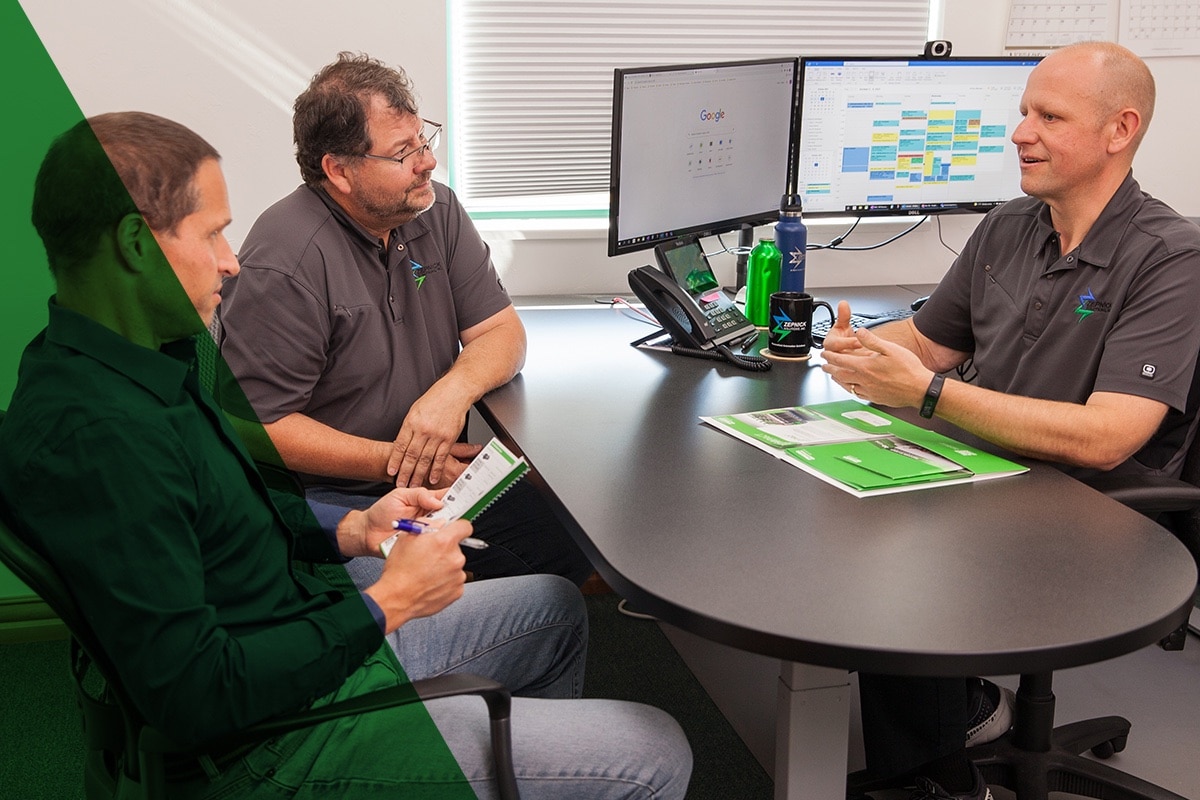
 

Zepnick Employee Stock Ownership Plan Benefits

“What an amazing success for the employee owners and the leaders of Zepnick Solutions, ” commented Victor Alam, Senior Counsel at Menke. “We have no greater joy at the Menke Group than watching employee owners share in the reward of a wildly successful transaction.”

A place with an even brighter future

Zepnick Solutions celebrated a major milestone in February of 2024 when it joined Salas O’Brien, bolstering the firm’s position as a driving force in the manufacturing sector.

“What an amazing success for the employee owners and the leaders of Zepnick Solutions, ” commented Victor Alam, Senior Counsel at Menke. “We have no greater joy at the Menke Group than watching employee owners share in the reward of a wildly successful transaction.”

The combined expertise and service will benefit the company’s many valued clients and Founder Jody Zepnick summed up the companies’ shared philosophy and path forward.

“Our team holds a very high standard and considers every day a new opportunity to improve,” said Jody Zepnick. “It is exciting to see that same mentality in Salas O’Brien, and we think this merger presents unlimited opportunity for the team, personally and professionally.”

Share this article:
LinkedIn
Twitter
Facebook
WhatsApp

Learn why an ESOP is better for You,
your Business, and your Employees

Upcoming Web Seminar

Free 90-Minute Webinar for Business Owners, CFOs & Advisors

Learn how ESOPs fuel growth, reduce taxes, and power succession—without giving up control.

Days
Hours
Minutes
Seconds

Why 2026 is the Time for ESOPs

Strong companies are using ESOPs to play offense. With rates stabilizing and talent still tight, employee ownership is delivering a durable edge:

    • Founder Liquidity—On Your Terms. Create a market for your shares without selling to private equity or competitors.
    • Major Tax Efficiency. Enable capital‑gains deferral for selling shareholders (Section 1042 eligibility) and reduce or even eliminate ongoing corporate income tax for S‑Corporation ESOPs—freeing cash for growth.
    • Talent Magnet. Meaningful employee ownership boosts engagement, retention, and performance—without relying solely on wage increases.
    • Resilient Margins. ESOP tax advantages help counter wage pressure, input costs, and tariffs—so more operating cash flows to strategy.
    • Control & Culture Intact. Transition ownership while keeping leadership and values in place.. Transition ownership while keeping leadership and values in place.

Bottom line: ESOPs create a rare win‑win‑win—for owners, the business, and employees.

What You’ll Learn

ESOP 101—Modern Playbook
How ESOPs work in 2026, who qualifies, deal structures, and timelines.

Tax Strategies that Change the Math
Capital‑gains deferral, corporate tax reduction/elimination for S‑Corp ESOPs, deductible contributions, and cash‑flow modeling.

Talent & Culture
Retention without across‑the‑board raises; ownership communications that actually move the needle.

Protecting Margins
How ESOP incentives can offset cost inflation and support reinvestment.

Valuation & Financing in Today’s Market
Bank/seller notes, mezzanine options, rate considerations, and why “bankable ESOPs” are closing now.

Governance & Control
Board, trustee, and management roles—what really changes (and what doesn’t).

Who Should Attend

    • Business Owners planning an exit, partial sale, or recapitalization

    • CFOs evaluating capital structure and tax strategy

    • Advisors & Succession Planners guiding owner‑led companies

    • HR & ESOP Committee Members building engagement around ownership

Agenda (90 Minutes)

    1. Welcome, Speakers & Why ESOPs in 2026 (5 min)
      Quick orientation; who Menke is and why ESOPs are winning right now.
    2. ESOP Basics & Business Owner Benefits (10 min)
      What an ESOP is; liquidity, diversification, succession, productivity.
    3. Myth‑Busting: What ESOPs Do—and Don’t—Require (5 min)
      No, you don’t have to sell 30%+, borrow big, or give up control.
    4. Deal Structures & Transaction Paths (10 min)
      Cash‑contribution (pay‑as‑you‑go), leveraged (bank/seller notes), and stock contribution; when each fits.
    5. Typical Scenarios & Outcomes (10 min)
      Gradual sales, minority/majority sales, 100% buyouts, and recap strategies.
    6. Who’s a Strong Fit (and Common Constraints) (5 min)
      Profitability, team/transition readiness, industry notes.
    7. Tax Strategy Deep Dive (10 min)
      S‑Corp ESOP distribution savings; C‑Corp §1042 capital‑gains deferral; entity‑path options.
    8. Valuation & Pricing vs. Third‑Party Sales (8 min)
      FMV standards, control vs. minority value, practical comparisons.
    9. Financing the ESOP (8 min)
      Bank market overview, seller paper, balance‑sheet effects, cash‑flow modeling.
    10. Plan Operations & Employee Communications (8 min)
      Eligibility, vesting, distributions, disclosures, and how transparency drives results.
    11. Culture, Engagement & Measured Performance Uplift (6 min)
      What changes on day 2; tying ownership to productivity.
    12. Roadmap & Next Steps (3 min)
      Feasibility, design/adopt, contributions, and timing the sale.
    13. Live Q&A (2 min)

Hear From Past Attendees

“I came in skeptical. I left with a concrete roadmap and the math to brief our board.”

“This clarified our exit plan and showed how we can reward employees at the same time."

Your Presenter: Phil DeDominicis

Phil DeDominicis is an ESOP strategist and M&A advisor who has guided 300+ companies through ESOP formations, financing, and transactions over 20+ years at Menke & Associates. He specializes in selling ESOP‑owned businesses to financial or strategic buyers and in helping ESOP companies acquire other businesses.
Before Menke, Phil spent 14 years in investment banking M&A at Morgan Stanley and Salomon Smith Barney, advising middle‑market companies on change‑of‑control transactions. He holds a B.S. in Chemical Engineering from the University of Delaware (1985) and an MBA in Finance & Accounting from UCLA Anderson (1989). Phil currently serves on six for‑profit and not‑for‑profit boards.

What Phil will cover:

    • Where ESOPs win in 2026 (tax, talent, and control)
    • Owner liquidity paths: minority, majority, and 100% sales
    • Financing options and what lenders look for
    • Valuation reality vs. third‑party sales
    • How to prep a board, trustee, and employees for a successful close

Reserve Your Spot Now

Seats are limited. Save yours now and receive the ESOP Feasibility Checklist.

10:00AM – 11:30AM PT
11:00AM – 12:30PM MT
12:00PM – 1:30PM CT
1:00PM – 2:30PM ET

No cost. Suitable for companies with $5M–$500M+ in revenue across construction, manufacturing, services, distribution, tech, and more.

FAQ (Quick Hits)

    • Do I lose control? No—most ESOPs preserve day‑to‑day control with your leadership team and board.

    • Is this only for certain industries? ESOPs work across sectors when cash flow is stable and leadership continuity matters.

    • Can we do a partial sale? Yes—stage liquidity over time while capturing tax benefits.

READY FOR AN ESOP NOW?

Interested in finding out how an ESOP could work for your company?

For a free preliminary analysis, just fill out our ESOP Feasibility Questionnaire.

Related Articles

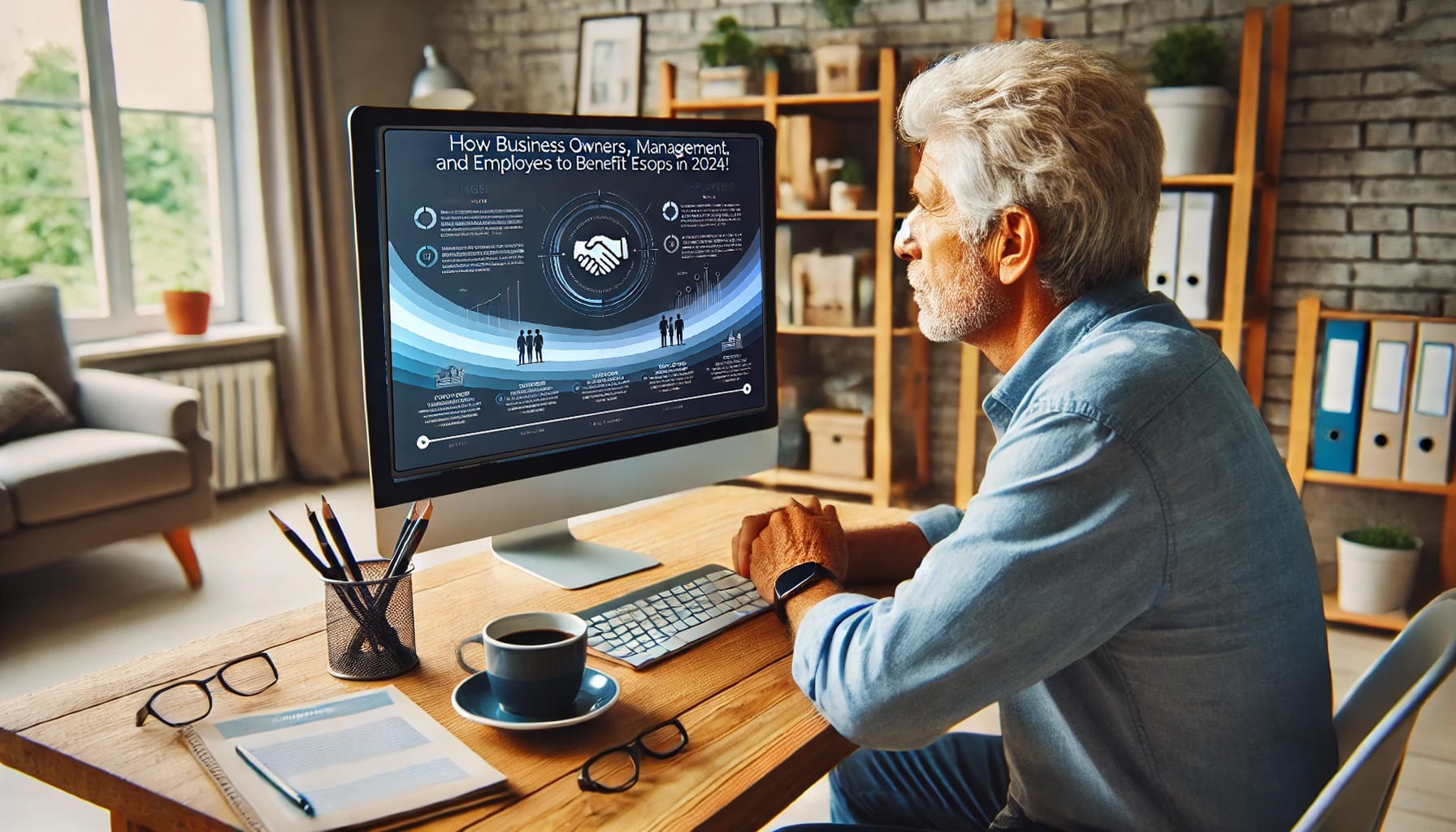
Man viewing employee stock ownership plan presentation on computer screen.
July 29, 2026
Don’t miss this opportunity to discover how ESOPs can align your business goals with the needs of employees and stakeholders.
Partially completed timber frame on a stone foundation, representing a second stage ESOP transaction to full ownership
September 28, 2026
Your minority ESOP has worked. The debt is paid down and the culture has taken hold. Selling the rest of the company to the ESOP can look like a repeat of the first deal, but valuation, financing, and governance all change once the ESOP takes control.
Brass straightedge on slate, representing consistent ESOP valuation standards under new federal law
September 17, 2026
For fifty years, the hardest question in employee ownership was not how to finance the deal or how to structure the tax benefits. It was what “adequate consideration” actually meant. Congress has now answered it — and the answer is narrower, and more useful, than the headlines suggest.
Unfinished steel-frame building with a focused beam of light, representing AEC marketing and ideal client focus
September 14, 2026
Most contractors say they win work on relationships, and most are right, up to a point. What happens when the people who hold those relationships retire, or when the firm tries to grow into a market where nobody knows its name?
Abstract suspended architectural span under cable tension, representing the long-term structure of a Section 1042 tax deferral
August 31, 2026
A seller who elects Section 1042 on a $100 million ESOP transaction can defer roughly $33 million in capital gains tax, potentially for life. The same election, structured without care, can leave that seller carrying leverage on a securities portfolio for decades. The difference is in how the portfolio is built.
Abstract network of interconnected nodes representing ESOP employee ownership culture
August 17, 2026
Two companies can have identical ESOP structures on paper and produce completely different results. The difference usually comes down to three specific things — and most companies get at least one of them wrong.
Abstract image of a converging path symbolizing a 2026 ESOP market midyear review
August 3, 2026
Halfway through 2026, the ESOP market looks different than it did in January — bank lending is more competitive, private equity firms are eyeing ESOPs as an exit, and legislation is moving. Here’s what’s actually changed.