September 15, 2020

Menke Congratulates Applewood Seed Company on Transition to Employee Ownership

The Menke Group was proud to advise and assist Colorado-based Applewood Seed Company, a wholesale supplier of bulk wildflower and garden seeds, with the design and implementation of their Employee Stock Ownership Plan (ESOP). The transaction, which closed on July 31st, 2020, is a critical component of the company’s comprehensive succession plan, and will keep Applewood Seed Company private, independent, and thriving for many years to come.
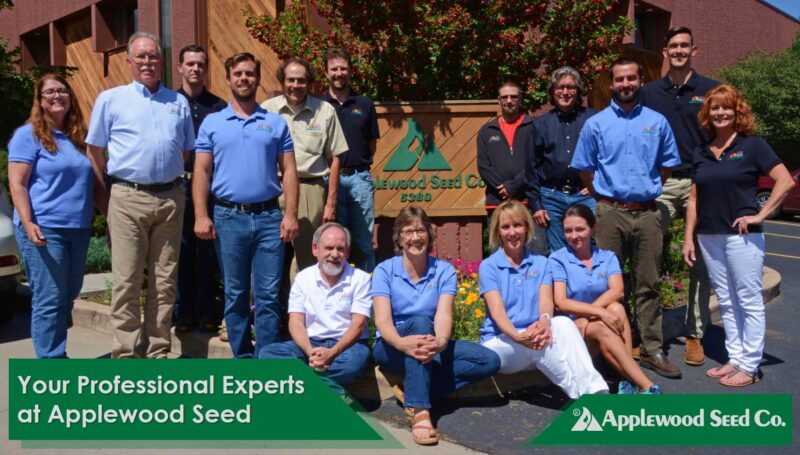
Applewood Seed Employee Stock Ownership Plan

Applewood Seed employees celebrate the company’s transition to an Employee Stock Ownership Plan

Applewood Seed Company was founded by Gene Milstein in 1965 in Golden, CO. In the 1970s, they implemented a research program to study most aspects of planting, growing, and cultivating wildflowers. In the 1980s, Applewood began marketing bulk wildflower seeds to the landscape industry. With a staff of 18, they maintain a global presence, providing high quality wildflower seeds to buyers in around the world. Anyone who has ever been struck by the beauty of a carefully maintained flower garden, whether on a golf course, at a park, or when driving down the highway, may have Applewood Seed Company to thank.

Applewood Seed was well positioned for the COVID-19 pandemic. With people across America stuck at home for prolonged periods, interest in home gardening surged, increasing the demand for Applewood’s wildflower seeds. At the same time, the realities of the pandemic prompted them to take decisive action to put a succession plan into place.

“We’ve had our share of equity buyers and industry people showing up quarterly, or even monthly to try to buy the company,” said Applewood CEO Norm Poppe. “We have a unique company with a unique culture, and we never felt any of those options were right for us.”

Ryan Guilford joined the company as its Chief Operating Officer in October, 2019, and brought with him an interest in ESOPs. “I had studied ESOPs in graduate school, and taught them for years as adjunct faculty.”

Guilford may not have known when he joined Applewood Seed Company that he would soon have an opportunity to put his knowledge of ESOPs into practice, but under the Milsteins’ leadership, the closely-held company had a strong focus on making the employees feel valued. Their employee benefits program already included 401(k) contributions and profit sharing, as well as a generous health plan.

“We believe our company is the strongest when our employees feel valued, empowered and are given the tools to be successful in their professional and personal lives,” Gene Milstein said in an announcement of their ESOP on their company website.

“Gene has always been paternalistic toward the company, in a good way,” explained Poppe. “We’ve always had really good benefits. The question was, how do we keep this going in perpetuity, not just for the older employees, but for the younger ones who are looking to see how the company takes care of the older ones.”

According to Poppe, they began seriously considering an ESOP in March, when the pandemic was already slowing down much of the economy, and he saw a story about the 10th anniversary of Bob’s Red Mill’s ESOP on the news. Bob’s Red Mill is one of the most recognizable ESOP companies, and the story of founder Bob Moore and his wife Charlee, as well as their commitment to their employees and to philanthropic giving, reminded Poppe of Gene and Dee Milstein.

The news broadcast about Bob’s Red Mill led Applewood to The Menke Group. “Bruce Armstrong and the whole Menke team were amazing,” said Guilford. “The amount of information they provided up front, the amount of free—truly free—resources, advice and guidance they provided, even before a single paper was signed, was incredible.”

“Everyone Menke recommended that we work with throughout the process felt like they were all part of the same team,” said Poppe. “We spoke to other ESOP advisors, and it felt like everyone was fighting for their own concept of how things ought to work. We could tell that would end up costing us in terms of time and money. With Menke, it was like an excellent football play where everyone is in sync, moving the ball down the field and handing it off for a touchdown.”

The Applewood team did their due diligence, speaking to over 15 different ESOP companies ranging from other businesses in the Denver area to other seed wholesalers on the other side of the country. Everything they learned made it clear that an ESOP would be the right fit for their company’s values and goals for the future.

With the Milsteins’ full confidence and support, Menke was able to help Applewood complete the full design and implementation of their ESOP in less than three months. The terms of the transaction ensured that all of their goals for the ESOP were met, including:

  • Granting the employee-owners a truly significant stake in the company.
  • Ensuring that the Milstein’s long history of philanthropic giving would continue.
  • Creating industry-leading benefits for current and future employees.
  • Providing substantial liquidity for the sellers.

Most importantly, Applewood Seed Company’s ESOP will protect Gene and Dee Milstein’s legacy for years to come.

“There are only a few companies who do the kind of work that Applewood Seed Company does at their level,” said Menke corporate counsel Michael Pasahow, who oversaw the plan design. “Without a clear succession plan, it could be difficult to fend off acquisition by a competitor. This ESOP will keep their business intact, keep it independent, and protect the jobs they’ve created.”

Poppe said they announced the ESOP to their staff in a virtual meeting because of the pandemic, and it was met with palpable excitement. He also sent out an email to some of their buyers and customers around the world.

“We got a tremendous amount of positive feedback right away,” Poppe said. “I got a call from a client in India, and a wonderful reply from a customer in The Netherlands. There’s this notion that here in America, we only care about money, so they love hearing that we’re making this kind of commitment to our employees and our culture.”

From all of us at The Menke Group, congratulations to Gene and Dee Milstein, and to all the new employee-owners at Applewood Seed Company!

If you want to learn how an ESOP can help your company blossom, contact us today for your free preliminary analysis.


Menke & Associates, Inc. has helped over 3,500 companies successfully transition to employee ownership. Our holistic ESOP approach enables a positive outcome for the company, its employees and its shareholders. We believe ownership is powerful.

Share this article:
LinkedIn
Twitter
Facebook
WhatsApp

Learn why an ESOP is better for You,
your Business, and your Employees

Upcoming Web Seminar

Free 90-Minute Webinar for Business Owners, CFOs & Advisors

Learn how ESOPs fuel growth, reduce taxes, and power succession—without giving up control.

Days
Hours
Minutes
Seconds

Why 2026 is the Time for ESOPs

Strong companies are using ESOPs to play offense. With rates stabilizing and talent still tight, employee ownership is delivering a durable edge:

    • Founder Liquidity—On Your Terms. Create a market for your shares without selling to private equity or competitors.
    • Major Tax Efficiency. Enable capital‑gains deferral for selling shareholders (Section 1042 eligibility) and reduce or even eliminate ongoing corporate income tax for S‑Corporation ESOPs—freeing cash for growth.
    • Talent Magnet. Meaningful employee ownership boosts engagement, retention, and performance—without relying solely on wage increases.
    • Resilient Margins. ESOP tax advantages help counter wage pressure, input costs, and tariffs—so more operating cash flows to strategy.
    • Control & Culture Intact. Transition ownership while keeping leadership and values in place.. Transition ownership while keeping leadership and values in place.

Bottom line: ESOPs create a rare win‑win‑win—for owners, the business, and employees.

What You’ll Learn

ESOP 101—Modern Playbook
How ESOPs work in 2026, who qualifies, deal structures, and timelines.

Tax Strategies that Change the Math
Capital‑gains deferral, corporate tax reduction/elimination for S‑Corp ESOPs, deductible contributions, and cash‑flow modeling.

Talent & Culture
Retention without across‑the‑board raises; ownership communications that actually move the needle.

Protecting Margins
How ESOP incentives can offset cost inflation and support reinvestment.

Valuation & Financing in Today’s Market
Bank/seller notes, mezzanine options, rate considerations, and why “bankable ESOPs” are closing now.

Governance & Control
Board, trustee, and management roles—what really changes (and what doesn’t).

Who Should Attend

    • Business Owners planning an exit, partial sale, or recapitalization

    • CFOs evaluating capital structure and tax strategy

    • Advisors & Succession Planners guiding owner‑led companies

    • HR & ESOP Committee Members building engagement around ownership

Agenda (90 Minutes)

    1. Welcome, Speakers & Why ESOPs in 2026 (5 min)
      Quick orientation; who Menke is and why ESOPs are winning right now.
    2. ESOP Basics & Business Owner Benefits (10 min)
      What an ESOP is; liquidity, diversification, succession, productivity.
    3. Myth‑Busting: What ESOPs Do—and Don’t—Require (5 min)
      No, you don’t have to sell 30%+, borrow big, or give up control.
    4. Deal Structures & Transaction Paths (10 min)
      Cash‑contribution (pay‑as‑you‑go), leveraged (bank/seller notes), and stock contribution; when each fits.
    5. Typical Scenarios & Outcomes (10 min)
      Gradual sales, minority/majority sales, 100% buyouts, and recap strategies.
    6. Who’s a Strong Fit (and Common Constraints) (5 min)
      Profitability, team/transition readiness, industry notes.
    7. Tax Strategy Deep Dive (10 min)
      S‑Corp ESOP distribution savings; C‑Corp §1042 capital‑gains deferral; entity‑path options.
    8. Valuation & Pricing vs. Third‑Party Sales (8 min)
      FMV standards, control vs. minority value, practical comparisons.
    9. Financing the ESOP (8 min)
      Bank market overview, seller paper, balance‑sheet effects, cash‑flow modeling.
    10. Plan Operations & Employee Communications (8 min)
      Eligibility, vesting, distributions, disclosures, and how transparency drives results.
    11. Culture, Engagement & Measured Performance Uplift (6 min)
      What changes on day 2; tying ownership to productivity.
    12. Roadmap & Next Steps (3 min)
      Feasibility, design/adopt, contributions, and timing the sale.
    13. Live Q&A (2 min)

Hear From Past Attendees

“I came in skeptical. I left with a concrete roadmap and the math to brief our board.”

“This clarified our exit plan and showed how we can reward employees at the same time."

Your Presenter: Phil DeDominicis

Phil DeDominicis is an ESOP strategist and M&A advisor who has guided 300+ companies through ESOP formations, financing, and transactions over 20+ years at Menke & Associates. He specializes in selling ESOP‑owned businesses to financial or strategic buyers and in helping ESOP companies acquire other businesses.
Before Menke, Phil spent 14 years in investment banking M&A at Morgan Stanley and Salomon Smith Barney, advising middle‑market companies on change‑of‑control transactions. He holds a B.S. in Chemical Engineering from the University of Delaware (1985) and an MBA in Finance & Accounting from UCLA Anderson (1989). Phil currently serves on six for‑profit and not‑for‑profit boards.

What Phil will cover:

    • Where ESOPs win in 2026 (tax, talent, and control)
    • Owner liquidity paths: minority, majority, and 100% sales
    • Financing options and what lenders look for
    • Valuation reality vs. third‑party sales
    • How to prep a board, trustee, and employees for a successful close

Reserve Your Spot Now

Seats are limited. Save yours now and receive the ESOP Feasibility Checklist.

10:00AM – 11:30AM PT
11:00AM – 12:30PM MT
12:00PM – 1:30PM CT
1:00PM – 2:30PM ET

No cost. Suitable for companies with $5M–$500M+ in revenue across construction, manufacturing, services, distribution, tech, and more.

FAQ (Quick Hits)

    • Do I lose control? No—most ESOPs preserve day‑to‑day control with your leadership team and board.

    • Is this only for certain industries? ESOPs work across sectors when cash flow is stable and leadership continuity matters.

    • Can we do a partial sale? Yes—stage liquidity over time while capturing tax benefits.

READY FOR AN ESOP NOW?

Interested in finding out how an ESOP could work for your company?

For a free preliminary analysis, just fill out our ESOP Feasibility Questionnaire.

Related Articles

Man viewing employee stock ownership plan presentation on computer screen.
July 29, 2026
Don’t miss this opportunity to discover how ESOPs can align your business goals with the needs of employees and stakeholders.
Brass straightedge on slate, representing consistent ESOP valuation standards under new federal law
September 17, 2026
For fifty years, the hardest question in employee ownership was not how to finance the deal or how to structure the tax benefits. It was what “adequate consideration” actually meant. Congress has now answered it — and the answer is narrower, and more useful, than the headlines suggest.
Unfinished steel-frame building with a focused beam of light, representing AEC marketing and ideal client focus
September 14, 2026
Most contractors say they win work on relationships, and most are right, up to a point. What happens when the people who hold those relationships retire, or when the firm tries to grow into a market where nobody knows its name?
Abstract suspended architectural span under cable tension, representing the long-term structure of a Section 1042 tax deferral
August 31, 2026
A seller who elects Section 1042 on a $100 million ESOP transaction can defer roughly $33 million in capital gains tax, potentially for life. The same election, structured without care, can leave that seller carrying leverage on a securities portfolio for decades. The difference is in how the portfolio is built.
Abstract network of interconnected nodes representing ESOP employee ownership culture
August 17, 2026
Two companies can have identical ESOP structures on paper and produce completely different results. The difference usually comes down to three specific things — and most companies get at least one of them wrong.
Abstract image of a converging path symbolizing a 2026 ESOP market midyear review
August 3, 2026
Halfway through 2026, the ESOP market looks different than it did in January — bank lending is more competitive, private equity firms are eyeing ESOPs as an exit, and legislation is moving. Here’s what’s actually changed.